Special Section Overview
With the rapid proliferation of blockchain technology, Decentralized Finance (DeFi), Creator Economy, Decentralized Autonomous Organization (DAO), and other Web3 applications have ushered in a new digital interaction and value exchange paradigm. While these systems promise unprecedented decentralization, transparency, and user sovereignty, their long-term sustainability remains a critical challenge. This multi-faceted challenge encompasses technical scalability, economic viability, environmental impact, and robust governance. Crucially, the performance, security, and efficiency of these decentralized social-technical systems are deeply intertwined with the underlying cloud, edge, and distributed computing infrastructure they run on.
This Special Session aims to foster a cross-disciplinary dialogue on the foundational challenges of building sustainable and trustworthy socio-technical systems for the decentralized web. We will explore how innovations in cloud-native architecture, resource management, security, and AI can address the pressing sustainability issues in DeFi, DAOs, and beyond. Furthermore, we will delve into the emerging synergy of blockchain and AI, particularly in creating verifiable and trusted AI models deployed on distributed cloud environments. This session invites researchers and practitioners from both academia and industry to address these pivotal challenges, charting a course towards a more robust and sustainable decentralized future.
Topics of Interest
We invite high-quality, original research submissions on topics including, but not limited to:
- Sustainable Blockchain Architectures and Protocols: Design and analysis of energy-efficient consensus, cloud-native architectures, and green validator operations on distributed cloud/edge infrastructure.
- Performance Optimization and Resource Management: Modeling, analysis, and optimization of blockchain systems' performance, scalability, and carbon footprint in cloud environments.
- Sustainable DeFi and Stablecoins: Design, stability analysis, and risk management of sustainable Decentralized Finance (DeFi) protocols and stablecoin mechanisms.
- Tokenomics and Economic Sustainability: Modeling of token economics, incentive mechanisms, and infrastructure strategies for long-term project viability and Real-World Asset (RWA) tokenization.
- Blockchain-enabled Trustworthy AI Systems: Utilizing blockchain for verifiable models, decentralized data governance, auditable provenance, and robust incentive mechanisms for AI applications on cloud platforms.
- Sustainable Governance and Security: Sustainable and scalable governance models for Decentralized Autonomous Organizations (DAOs), combined with formal verification and automated security auditing for smart contracts and protocols.
- Metrics, Standards, and Best Practices: Development of novel sustainability metrics, ESG (Environmental, Social, Governance) standards, and benchmarking methodologies for the Blockchain ecosystem.
- Real-World Applications for Sustainability: Demonstrating long-term viability and impact through Blockchain applications in areas such as sustainable energy systems, equitable finance, trustworthy supply chains, and innovative social governance.
Important Dates
- Paper Submission: September 30, 2025
- Notification of Acceptance: October 15, 2025
- Camera-Ready: October 30, 2025
- Special Section Date: November 16, 2025 (TBC)
Submission Guidelines
Authors are invited to submit original, unpublished research papers. Submissions should not exceed 8 pages, including tables, figures, and references in IEEE CS format. The template files for LATEX or WORD can be downloaded from the IEEE site https://www.ieee.org/conferences/publishing/templates.html. Submission must be made in PDF format only with savable text and embedded fonts.
The review process will be doubly blind, and so a submission should not include any information that may identify the authors of the manuscripts. Technical content of the camera-ready manuscript must be identical to the submitted version except for changes made to address TPC review comments.
For each accepted submission, at least one of the co-authors must have a full conference registration and present the work in person.
Special Section Chairs
- Dr. Andrés Azqueta Gavaldón, Bank of Spain, andres.azqueta@gmail.com
- Prof. Wei Cai, University of Washington, weicaics@uw.edu
- Dr. Hongzhou Chen, Ckb Eco Fund, hongzhou@ckbeco.fund
- Dr. Khushboo Khullar, Lightning Ventures, khushboo@ltng.ventures
Program Committee
- Dr. Sizheng Fan, Peking University, China
- Jeffrey Hu, HashKey Capital, Hong Kong
- Dr. Lehao Lin, The Chinese University of Hong Kong, Shenzhen, China
- Prof. Yunwen Liu, KU Leuven, Belgium
- Dr. Bruno Woltzenlogel Paleo, The Stable Order, Multiple Countries
- Dr. Jinghan Sun, University of Wollongong in Dubai, United Arab Emirates
- Shiman Wang, PricewaterhouseCoopers (PWC), China
- Dr. Hao Wu, The Chinese University of Hong Kong, Shenzhen, China
- Dr. Ren Zhang, Cryptape and Nervos, China
- Dr. Rong Zhao, Shenzhen Institute of Information Technology, China
Special Section Co-Sponser
- IEEE Blockchain Shenzhen Branch, by Prof. Hui LI, Peking University Shenzhen Graduate School
- Shenzhen City Computer Federation (SZCCF) Eastern Center
Contact Information
For any questions regarding this proposal, please contact:
Email: Hongzhou Chen at hongzhouchen@ieee.org
Best Papers
Enhancing Tail NFT Recommendation via Dependency-aware Extreme Multi-label Learning
Keynote Speaker
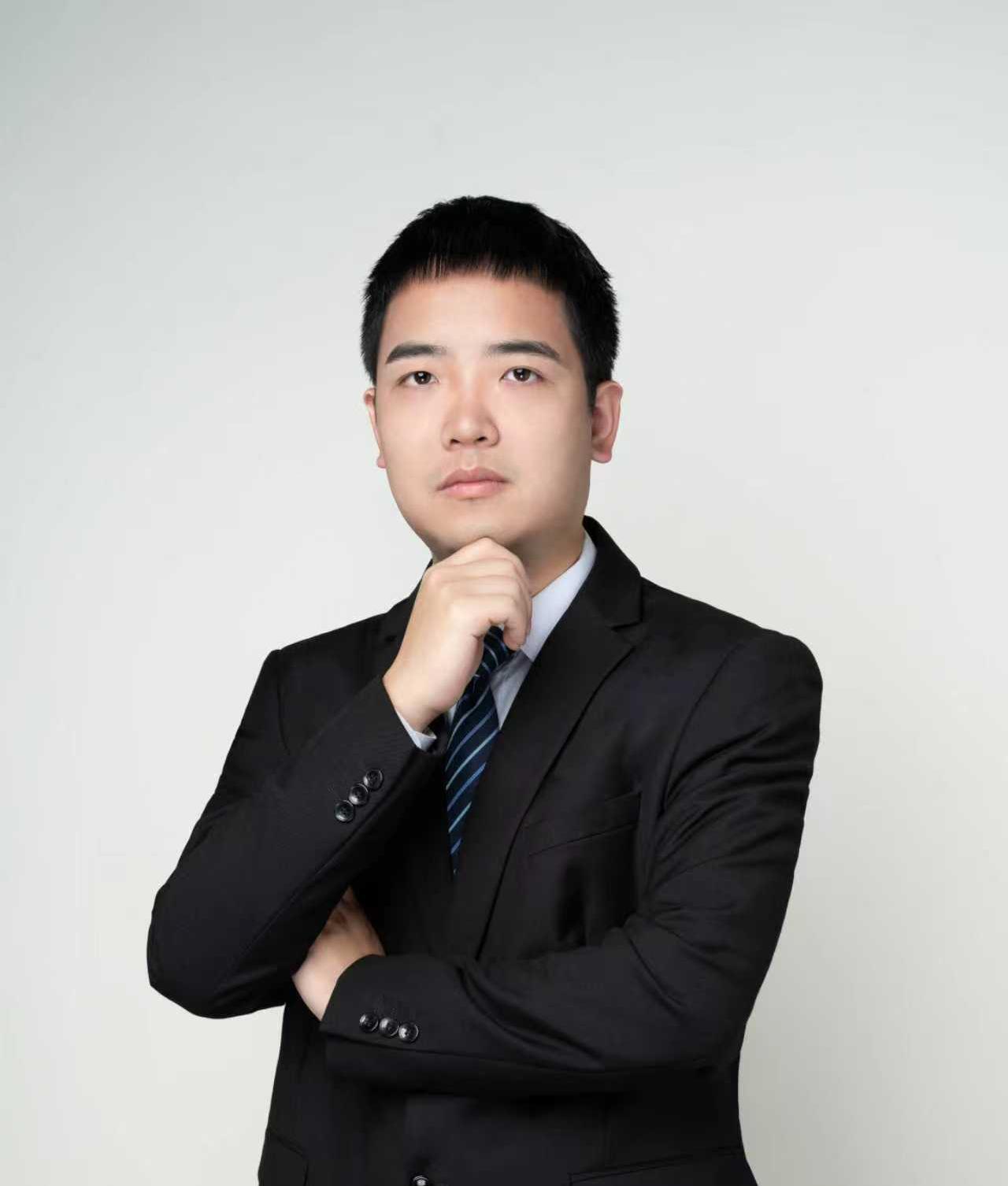
Dr. Jiachi Chen
Associate Professor
School of Software Engineering, Sun Yat-sen University, China
AI for Web3 Finance: Challenges and Opportunities
Abstract
The emergence of Web3 technologies enables financial activities to be executed without centralized organizations, leading to many new applications such as DeFi, stablecoins, and RWA. Meanwhile, AI technologies represented by large language models (LLMs) are driving a new wave of technological innovation. These two technologies — LLMs and Web3 — exhibit strong complementarities, i.e., LLMs for Web3 and Web3 for LLMs.
This talk will present two major opportunities that LLMs bring to the Web3 domain. First, LLMs can give Web3 systems intelligence, making Web3 applications more usable and accessible. Second, LLMs introduce new methodological avenues for security auditing, making Web3 applications potentially more secure. However, LLMs themselves exhibit issues such as hallucination, and Web3 systems also expose complex attack surfaces. This talk will discuss both the above opportunities and challenges, and will introduce some of our latest research on these topics.
Biography
Jiachi Chen is an Associate Professor at the School of Software Engineering, Sun Yat-sen University. His research focuses on blockchain reliability, smart contract security, and LLM security. His work has identified tens of thousands of smart contract defects, involving digital assets valued at tens of millions of U.S. dollars. Over the past five years, he has published more than 50 CCF-A papers. According to CSRankings, his publications in top-tier software engineering venues ranked 22nd globally during 2023–2025. He has received five ACM SIGSOFT Distinguished Paper Awards, including from top conferences such as ICSE, ISSTA, and INFOCOM.